Cybersecurity is no longer just a concern for large organizations; it has become essential for everyone who uses technology. Among the many tools used by ethical hackers and penetration testers, LinPEAS stands out as one of the most powerful scripts for identifying privilege escalation opportunities in Linux systems. But the real question is: how does LinPEAS actually work?
we will explore LinPEAS in a clear, human-friendly tone so that even beginners can understand its functionality. Whether you are learning ethical hacking or just curious about Linux security, this guide will help you grasp the concept step by step.
What is LinPEAS?
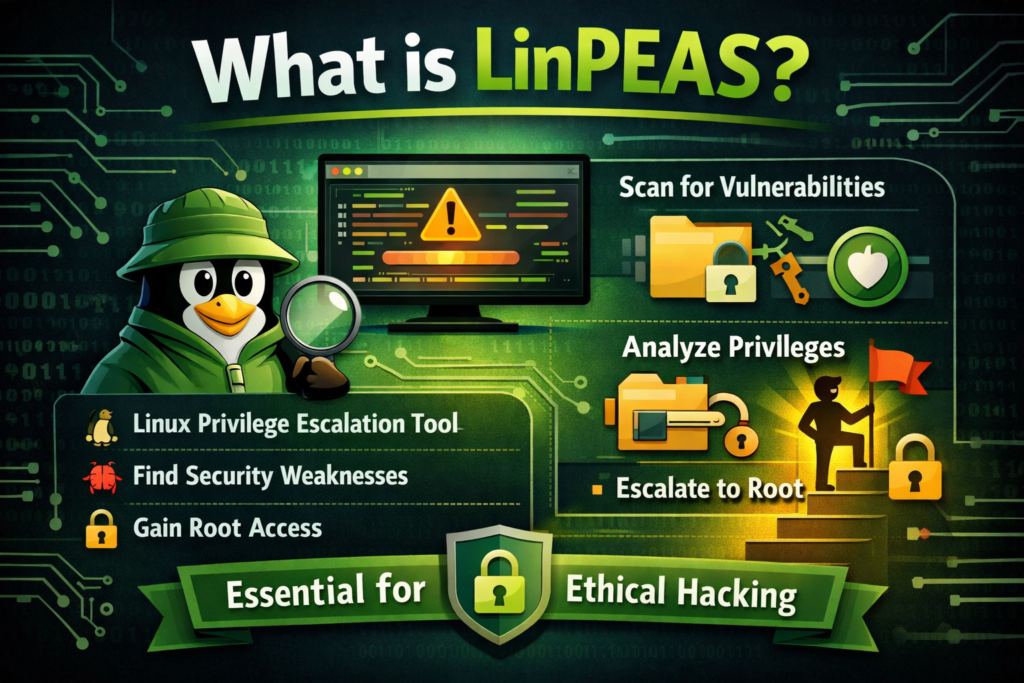
LinPEAS is a part of the well-known PEASS (Privilege Escalation Awesome Scripts Suite). It is specifically designed for Linux systems and helps security professionals quickly find weaknesses that could allow a normal user to gain higher privileges, such as root access.
Instead of manually checking hundreds of system configurations, permissions, and services, LinPEAS automates the entire process. It scans the system and highlights potential vulnerabilities in an easy-to-read format.
How Does LinPEAS Work?
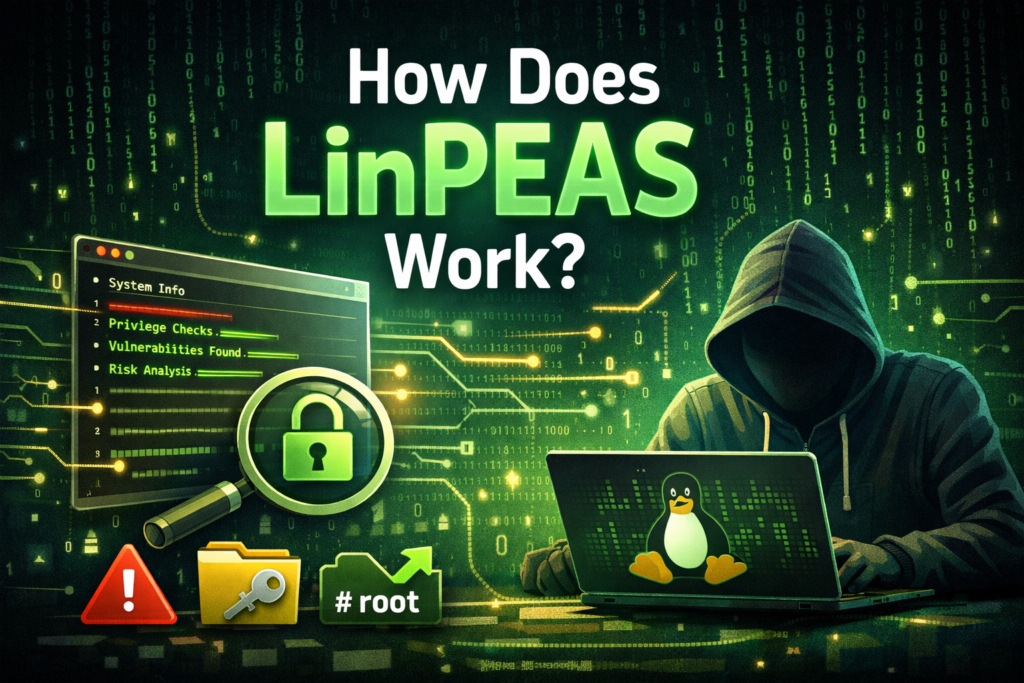
LinPEAS works by running a series of automated checks on a Linux system. When executed, it collects detailed information about the environment and analyzes it to detect possible security misconfigurations.
At its core, LinPEAS follows a structured approach. It gathers system data, evaluates permissions, identifies risky configurations, and then presents the findings in a color-coded output. This makes it easier for users to quickly spot potential privilege escalation paths.
The script does not exploit vulnerabilities itself. Instead, it acts as a guide by pointing out where weaknesses exist. This is important because it allows ethical hackers to manually verify and safely test those vulnerabilities.
Step-by-Step Breakdown of LinPEAS Functionality
When LinPEAS is executed on a Linux machine, it performs multiple layers of analysis.
First, it collects basic system information. This includes details about the operating system, kernel version, hostname, and user permissions. This step is crucial because certain vulnerabilities are specific to particular kernel versions or configurations.
Next, LinPEAS checks user privileges. It examines what commands the current user can run, especially through sudo permissions. Misconfigured sudo rules can often lead to privilege escalation, and LinPEAS highlights these clearly.
After that, the script scans for writable files and directories. If a user has write access to sensitive locations, it could be used to modify system behavior. LinPEAS identifies such risky permissions and marks them for attention.
The tool also looks into running processes and services. Sometimes, services running with high privileges may have weaknesses that can be exploited. LinPEAS gathers this information and checks for known issues.
Another important part of its working is searching for credentials. It scans configuration files, logs, and scripts to find hardcoded passwords or sensitive data that might be exposed.
Finally, LinPEAS performs checks related to cron jobs, environment variables, and installed software. These areas often contain hidden vulnerabilities that are overlooked during manual analysis.
Color-Coded Output: Making Results Easy to Understand
One of the most user-friendly features of LinPEAS is its color-coded output. Instead of overwhelming the user with plain text, it uses colors to highlight the importance of each finding.
For example, red indicates high-risk vulnerabilities that require immediate attention. Yellow represents possible issues that may need further investigation. Green usually indicates safe or less critical information.
This visual approach makes it much easier for beginners to understand the results without needing deep technical expertise.
Why LinPEAS is So Effective
The effectiveness of LinPEAS comes from its automation and comprehensive coverage. It combines multiple manual checks into a single script, saving time and effort.
Another reason for its popularity is that it is constantly updated. New vulnerabilities and techniques are regularly added, making it a reliable tool for modern security testing.
LinPEAS also follows real-world attack methodologies. Instead of just listing system details, it focuses on practical privilege escalation vectors that attackers commonly use.
Real-World Example of LinPEAS in Action
Imagine you have access to a Linux server with a low-privileged user account. Manually checking every possible misconfiguration would take hours, if not days.
By running LinPEAS, you can quickly identify that the user has permission to run a specific command as root without a password. This is immediately flagged in red. From there, you can investigate further and potentially gain root access.
This example shows how LinPEAS simplifies complex security testing into a manageable process.
Is LinPEAS Safe to Use?
LinPEAS is generally safe when used in controlled environments such as penetration testing labs or systems where you have permission. It is a read-only script, meaning it does not make changes to the system by default.
However, it is important to use it responsibly. Running such tools on unauthorized systems can be illegal and unethical. Always ensure you have proper permission before using LinPEAS.
Who Should Use LinPEAS?
LinPEAS is useful for a wide range of users. Beginners in ethical hacking can use it to learn about Linux vulnerabilities in a practical way. Cybersecurity professionals rely on it for quick assessments during penetration tests.
System administrators can also benefit from LinPEAS by identifying and fixing security weaknesses in their own systems.
Tips for Using LinPEAS Effectively
To get the most out of LinPEAS, it is important to understand its output rather than blindly relying on it. Take time to analyze each finding and verify whether it can actually be exploited.
Running LinPEAS multiple times under different user accounts can also reveal additional insights. Sometimes, vulnerabilities are only visible under specific conditions.
Keeping the script updated is another key factor. Since new vulnerabilities are discovered regularly, using the latest version ensures more accurate results.
Common Misconceptions About LinPEAS
One common misunderstanding is that LinPEAS automatically hacks systems. In reality, it does not perform any exploitation. It only highlights potential weaknesses.
Another misconception is that it guarantees privilege escalation. While it increases the chances by identifying vulnerabilities, successful exploitation still depends on the specific system configuration.
Conclusion
LinPEAS is a powerful and user-friendly tool that simplifies the complex process of Linux privilege escalation testing. By automating system checks and presenting results in a clear, color-coded format, it allows both beginners and professionals to quickly identify potential vulnerabilities.
Understanding how LinPEAS works is an important step for anyone interested in cybersecurity. It not only helps in finding weaknesses but also teaches valuable lessons about system security and configuration.
If used responsibly and combined with proper knowledge, LinPEAS can be an essential part of your cybersecurity toolkit.